Table of Contents
Many of us dream of a truly unique escape, and Great Sand Dunes National Park offers just that. You’re about to discover how to conquer North America’s tallest dunes, try exhilarating sand skiing, and unwind in soothing hot springs, all packed into one unforgettable trip. This guide ensures you’ll experience the very best of this Colorado gem, avoiding common pitfalls and maximizing every moment.
What sparked my obsession with Great Sand Dunes National Park?
Seeing those massive peaks and sand piles in one frame
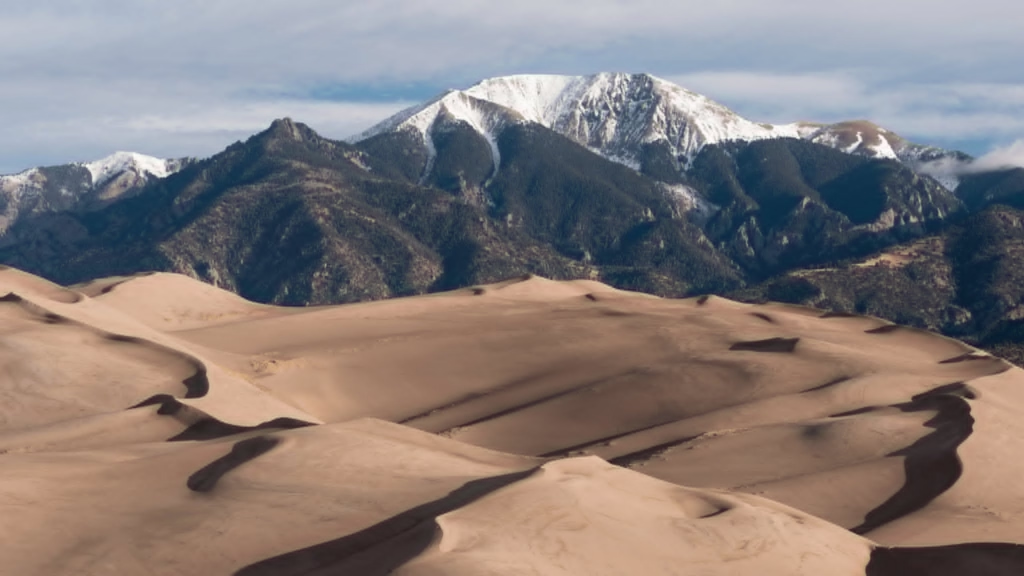
You know, it’s not every day you see something that genuinely stops you in your tracks. I first stumbled upon a photo of Great Sand Dunes National Park years ago, and it was that immediate, visceral reaction – a blend of awe and disbelief – that hooked me. The sheer scale was what got me, those towering dunes dwarfed by the Sangre de Cristo Mountains right behind them.
Imagine seeing a desert and a mountain range colliding like that; it’s a geological anomaly. You’re looking at what seems like a vast Sahara, but then you lift your gaze just a bit, and there are snow-capped fourteeners staring back. It’s a truly unique juxtaposition that sparked my initial fascination.
Why a two-day mix of hiking and soaking is the perfect sweet spot
Trying to cram everything into a single day at Great Sand Dunes National Park? You’d be rushing, and honestly, you’d miss out on the true magic. A two-day itinerary, however, gives you the ideal balance.
This allows you to dedicate ample time to both the challenging hikes on the dunes and the much-needed relaxation afterward. You’ll have a full day to conquer those sandy peaks, feel the burn in your calves, and then another to truly unwind.
Think about it: you spend one day pushing your limits, perhaps even trying out some sandboarding or sledding, which is surprisingly exhausting. Then, you get to completely reset. That second day is your reward – a chance to let your muscles recover, perhaps at one of the nearby natural hot springs, leaving you feeling refreshed rather than utterly depleted.
A quick sneak peek at the waterfalls and giant dunes ahead
Before we dive deeper into the nitty-gritty, let’s paint a picture of what awaits you. You’ll be navigating through icy streams to reach Zapata Falls, an experience that’s as refreshing as it is invigorating. It’s a fantastic cool-down before the main event.
Then, you’ll be staring up at the colossal dunes themselves, ready to tackle their sandy slopes. You’re going to feel small, but incredibly determined. These aren’t just piles of sand; they’re dynamic, living mountains that shift and change with the wind, offering a different challenge every time you visit.
The long drive and that “wow” moment when you arrive
Cruising through Colorado’s wild backcountry on the way in
You’re probably thinking, “Another long drive?” And yes, it is. But this isn’t your average interstate slog. You’ll wind through some of Colorado’s most scenic and untamed backcountry, feeling the world melt away with every mile.
Miles of open road stretch out, framed by distant peaks, making you feel like you’re truly escaping. It’s a journey that actually prepares you for the sheer scale of what’s coming, a slow reveal of the natural grandeur.
Catching your first glimpse of the Sangre de Cristo range
Suddenly, the majestic Sangre de Cristo Mountains appear, jagged and imposing against the sky. Their snow-capped summits, even in summer, are a breathtaking sight, hinting at the dramatic elevation changes you’re about to experience.
These peaks aren’t just pretty scenery; they’re an integral part of the park’s unique ecosystem, capturing moisture and funneling winds that actually helped form the dunes over millennia.
You’ll notice the distinct reddish hue, especially at sunrise or sunset – that’s where they get their name, “Blood of Christ,” a truly fitting description for their dramatic appearance.
My take on the best places to crash for a home base
Choosing your home base really depends on what kind of experience you’re after. If you want to be right in the thick of it, the park’s own campground is unbeatable for convenience, though spots fill up fast.
Outside the park, Alamosa offers more amenities and restaurant choices, a good option if you prefer a wider selection of creature comforts after a long day of exploring.
For those who love a bit of rustic charm, or perhaps want to save a few bucks, places like the Great Sand Dunes Lodge offer a simpler, more secluded stay with fantastic views of the dunes from many rooms.
What’s the real deal with the hike to the falls?
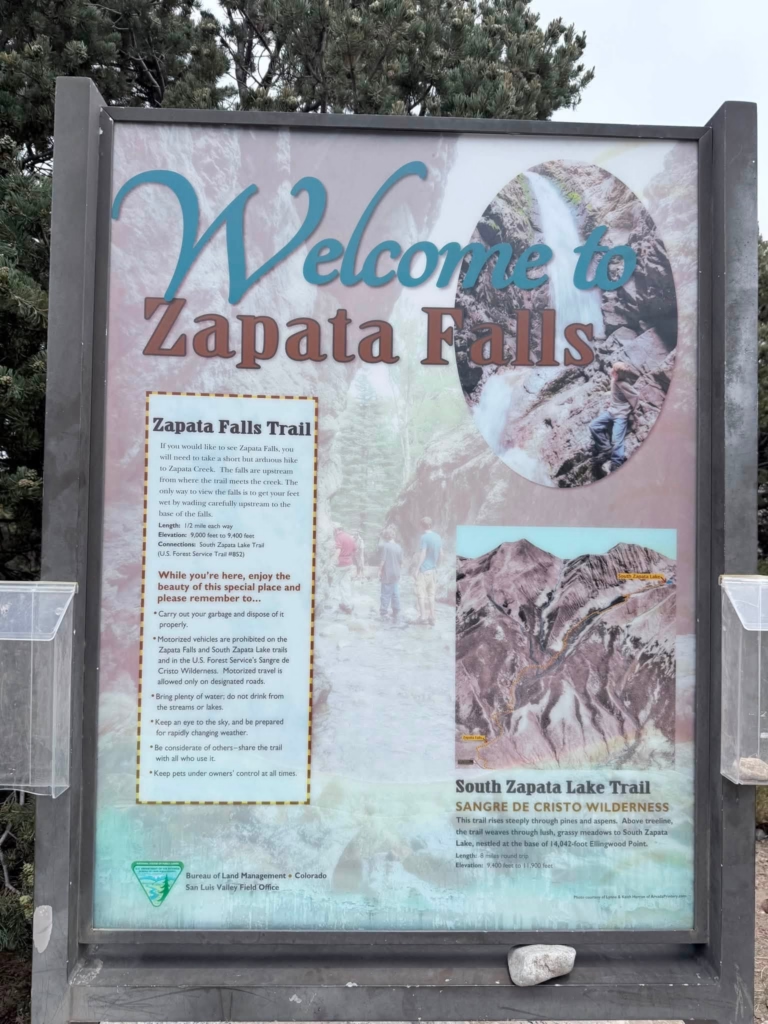
You’re probably wondering if this “hike” to Zapata Falls is a proper trek or just a stroll. Well, it’s a bit of both, offering a unique experience that’s less about elevation gain and more about embracing the elements. It’s not your typical mountain climb, that’s for sure. It’s an unforgettable journey into a hidden natural wonder, and you’ll find it’s a perfect warm-up for the big dunes. The short distance makes it accessible, but the reward – the stunning waterfall frozen in time – is absolutely worth every chilly step.
Let’s talk distance and why it’s not a scary climb
The trailhead itself is located just a few miles south of the main park entrance, making it a super convenient stop. You’ll drive up a somewhat bumpy dirt road to get there, but most vehicles can handle it without a problem. From the parking lot, it’s a relatively short walk – maybe half a mile – to the mouth of the canyon. You won’t be huffing and puffing up steep inclines; instead, you’re mostly walking along a well-defined path.
The step-by-step guide to finding the hidden canyon
Finding the canyon entrance is straightforward, but knowing what to expect inside is key. You’ll follow the main path from the parking lot, which is generally flat and easy to navigate. Keep an eye out for signs pointing you towards Zapata Falls; they’re pretty clear.
| Step 1: The Trailhead Start | Park your car at the designated lot after the scenic, albeit sometimes dusty, drive up the access road. |
| Step 2: The Initial Walk | Follow the well-marked dirt path for about a quarter-mile. You’ll be walking through scrub brush and enjoying some great views of the valley. |
| Step 3: Reaching the Stream Bed | The path eventually leads you down to the rocky stream bed. This is where the adventure truly begins, as you’ll soon be walking directly in the water. |
Why you’ve gotta embrace the freezing creek water
You’re going to get wet, and yes, it’s going to be cold. The creek water flowing from the falls is snowmelt, even in summer, so prepare for a serious chill. This isn’t a gentle splash; it’s a full-on wade. But seriously, that initial shock of the icy water is part of the experience, a refreshing jolt that makes the journey even more memorable. Think of it as a natural cold plunge – good for the soul, right?
Wearing appropriate footwear is non-negotiable here. You’ll want sturdy water shoes, old sneakers, or even hiking sandals with good grip. Flip-flops just won’t cut it, as the rocks are slippery and uneven. Trust me, you don’t want to lose a shoe or, worse, twist an ankle in that frigid water.
Factors you should consider before you get your feet wet
Venturing into the icy waters around Great Sand Dunes National Park can be an incredible experience, but it’s not something you should do without a little preparation. You’ll want to think about a few key things to ensure your comfort and, more importantly, your safety.
- Water temperature: The mountain runoff is always cold, even in summer.
- Footwear: Slippery rocks are everywhere.
- Currents: Some areas can have surprisingly strong flows.
Any of these factors could turn a fun splash into a tricky situation if you’re not ready.
Picking the right water shoes so you don’t slip on rocks
Good water shoes are genuinely a game-changer here. You’re going to encounter a lot of slick, algae-covered rocks, especially as you approach Zapata Falls. Regular flip-flops just won’t cut it, and they’ll likely lead to a nasty fall. Look for shoes with excellent traction and a secure fit. You don’t want them slipping off your feet mid-stream. Some folks even prefer closed-toe options for extra protection against stubbed toes.
Dealing with the chilly mountain water like a pro
The water, oh, the water! It’s fed by snowmelt, so it’s consistently freezing cold – even on the hottest summer days. This isn’t a casual dip; it’s an invigorating, almost shocking, experience. Prepare yourself mentally for that initial plunge. You’ll feel a jolt, but your body quickly adjusts. Don’t rush it; wade in slowly to let your system acclimate to the frigid temperatures.
Why a sturdy pair of sandals is a total game changer here
A solid pair of adventure sandals can be incredibly versatile for this trip. They offer better protection and grip than flimsy flip-flops, but still allow your feet to breathe and drain quickly after getting wet. You’ll appreciate that when you’re transitioning from stream crossings to dry trails. Look for sandals with adjustable straps and a rugged sole. Brands like Chaco or Teva come to mind, known for their durable designs. They’re built to withstand varied terrain and keep your feet secure, which is exactly what you need when you’re scrambling over wet rocks or wading through shallow streams.
My honest take on that first icy splash in the canyon
The shock of the cold and why it actually felt amazing
Stepping into the stream, you’ll immediately feel that frigid mountain runoff embrace your ankles. It’s a genuine jolt, a sharp intake of breath as the cold penetrates your skin – but it’s also incredibly invigorating, a sensation that truly wakes up every nerve ending.
That initial shock quickly gives way to a strange numbness, allowing you to push deeper into the canyon. It’s a refreshing cleanse, shaking off any lingering road fatigue and preparing you for the unique beauty ahead.
Why the “hidden” waterfall is 100 percent worth the hype
Pushing through the narrow, water-filled canyon to see Zapata Falls is absolutely worth the effort, even with the cold water. The way the falls are tucked away, almost a secret reward, makes the short trek feel like a real adventure.
You’re importantly walking *into* the mountain, following the stream as it carves its path. The anticipation builds with every step, and then suddenly, you’re there, standing in a small, echoing chamber with the water thundering down.
The falls themselves are beautiful, cascading down with surprising force into the icy pool below. The spray creates a fine mist in the air, catching the light in a way that feels almost magical – it’s a truly immersive experience you won’t forget.
Wrapping up day one with some decent food and rest
After your icy canyon adventure, heading back to civilization for some good food and a warm bed feels like a well-earned reward. You’ll definitely have worked up an appetite and be ready to relax.
We found a great local spot that served some surprisingly tasty burgers and craft beer, which was just what we needed to warm up and recharge. It’s important to fuel up properly after that kind of exertion.
Getting a solid night’s sleep is critical, especially with the demanding dune climb awaiting you on day two. Don’t skimp on rest; your legs will thank you when you’re halfway up High Dune.
Facing the giant sand dunes on day two of the trip
Standing at the base of North America’s tallest dunes
You’re going to wake up bright and early, eager to tackle those massive sand dunes. Standing at the base, you really get a sense of their immense scale; they truly are the tallest dunes in North America, towering over everything else. It’s a humbling experience, to say the least. The sheer size makes you feel tiny, a speck against these colossal natural formations. You’ll crane your neck, trying to take in the full height, and probably feel a mix of excitement and a little bit of awe.
Why this landscape honestly feels like another planet
This place doesn’t quite feel like Earth, does it? You’re surrounded by these immense, rippling mountains of sand, stretching out as far as the eye can see, and it’s unlike any other desert you’ve likely encountered. The way the light plays on the curves and shadows makes it seem almost surreal. It’s truly a geological marvel, formed over thousands of years by winds carrying sand from the San Luis Valley. You’re witnessing a dynamic, constantly shifting environment, which adds to that otherworldly vibe. The unique combination of a vast sand sea nestled against the jagged Sangre de Cristo Mountains creates a stark, beautiful contrast. It’s almost like two different planets collided right here in Colorado.
The best time to start your climb before you fry in the sun
Starting your dune climb early is absolutely non-negotiable if you want to avoid feeling like a fried egg. You’ll want to hit the sand right around sunrise, or at least within an hour or two of it. Trust me, the sand gets incredibly hot very quickly. Later in the day, the surface temperature of the sand can reach scorching levels – easily over 150°F – making it dangerous for your feet and even your pets. You’ll find yourself scrambling for any patch of shade, which is rare out there. Plus, those early morning hours offer the most comfortable temperatures for hiking. You’ll experience cooler air and softer light, which is perfect for photography and a much more enjoyable ascent.
Sand skiing and sledding: Tips for not face-planting
You’re probably itching to hit those sandy slopes, aren’t you? It looks easy, but a few pointers will keep you upright and smiling. Always lean back slightly, almost as if you’re sitting in a chair, and keep your weight centered. The biggest mistake newcomers make is leaning too far forward, which is a fast track to a mouthful of sand. This is particularly true if you’re trying out a sandboard for the first time.
Renting your gear ahead of time so you don’t miss out
Don’t just show up expecting to grab a sandboard or sled. Gear rentals, especially during peak season, can be extremely limited. Imagine driving all that way only to find everything’s gone! Many local outfitters offer reservations online. A quick search for “Great Sand Dunes sandboard rental” will give you a few good options. This ensures your equipment is waiting for you when you arrive.
What to wear to keep the sand out of every single crevice
The sand here is incredibly fine and gets everywhere – and I mean everywhere. Think beyond just your shoes. Long sleeves and pants are your best friends, even on a warm day, to prevent painful sand burns from falls and to keep the grit out. Consider wearing gaiters over your boots if you have them, or at least tuck your pants into your socks. You’ll thank me later when you’re not shaking sand out of your underwear for a week. A wide-brimmed hat and sunglasses are also non-negotiable for sun protection and keeping sand out of your eyes.
The “climb up, slide down” workout you didn’t ask for
Getting to the top of a dune for that exhilarating slide is half the adventure, but it’s also a serious workout. The soft sand makes every step feel like two, and you’ll be using muscles you didn’t even know you had. Pace yourself on the ascent; it’s not a race. You’ll be climbing at a much slower rate than you expect, especially when heading up taller dunes like High Dune. This challenging trek makes the ride down even more rewarding.
Pros and cons of different sand-sliding gear types
Choosing the right gear really makes a difference in your sand-sliding experience. You’ve got a few options, each with its own quirks and thrills. But knowing what to expect from each will save you a lot of frustration – and maybe a few tumbles! Here’s a quick rundown to help you pick your weapon of choice for conquering those sandy slopes:
| Pros | Cons |
|---|---|
| Great speed and maneuverability | Steep learning curve |
| Exciting for experienced riders | Requires good balance |
| Can carve and turn like snowboarding | Harder to stop quickly |
| Offers a true “surfing the sand” feel | Not ideal for beginners |
| More challenging and rewarding | Can be physically demanding |
Why sandboards are great for the adrenaline junkies
If you’re chasing that rush, a sandboard is probably what you’re looking for. These boards are designed for standing up, much like a snowboard, letting you carve down the dunes with serious speed. You’ll feel the wind in your hair and sand kicking up behind you. They offer a fantastic sense of control and freedom, especially once you get the hang of it. For those who love a challenge and want to truly master the dunes, sandboarding is the ultimate choice.
The pros and cons of using a sit-down sand sled
Sand sleds are a popular choice, especially if you’re looking for a more relaxed ride. You simply sit down, hold on, and let gravity do the rest. These are often easier for beginners and kids to manage. They don’t offer the same carving ability as a sandboard, but they’re fantastic for pure, unadulterated speed in a straight line. Just be ready for a bumpy ride!
| Pros | Cons |
|---|---|
| Easy for beginners and kids | Less maneuverability |
| No special skills required | Can be a very bumpy ride |
| Great for straight-line speed | Harder to control direction precisely |
| More stable than standing gear | You’re lower to the ground, so more sand in your face |
| Fun for casual sliding | Doesn’t offer carving or advanced tricks |
Sitting low to the sand on a sled means you’re going to feel every ripple and bump, which can be part of the fun, or a bit jarring, depending on your preference. You’ll likely end up with sand *everywhere*, but that’s just part of the experience, right? Just make sure you’re ready for that sensation.
Why regular snow skis just don’t cut it on the sand
You might be thinking, “Hey, I ski in the winter, why not on sand?” The truth is, regular snow skis are a completely different beast. The friction of sand compared to snow is immense, and your typical ski bases just aren’t designed for it. Trying to ski on sand with snow skis is a recipe for frustration, not fun. You’ll find yourself sinking, sticking, and generally getting nowhere fast. The specialized waxes and materials used on sandboards and sleds are what make them glide effectively.
How to actually survive the dune climb without quitting
You’ll quickly discover the dunes are a different beast entirely from a regular mountain trail. For every two steps you take forward, you often slide one step back. It’s incredibly deceiving, and the sun can make it feel like you’re in an oven, even on a mild day. Pacing yourself is absolutely critical; don’t try to sprint up, or you’ll burn out fast.
Try to find the harder, wind-packed ridges to walk on whenever possible. These offer a bit more purchase and make the ascent less taxing. And don’t be afraid to take frequent, short breaks to catch your breath and just soak in the incredible views around you – it’s part of the experience, after all!
Staying hydrated when the sun is beating down on you
The dry air and relentless sun on the dunes will dehydrate you faster than you can imagine. You need to carry significantly more water than you think you’ll need, especially if you’re planning on being out there for more than an hour or two. A good rule of thumb is at least a liter per hour, per person.
Consider bringing electrolyte packets or drinks too. Plain water is good, but when you’re sweating profusely, you’re losing more than just H2O. Replenishing those salts and minerals will help prevent fatigue and muscle cramps, keeping you strong for the climb.
Protecting your eyes and skin from the flying grit
The wind whips across the dunes almost constantly, sending fine sand particles airborne. This isn’t just annoying; it can be downright painful and cause real problems for your eyes and skin. Good quality sunglasses are non-negotiable – wrap-around styles work best to keep sand from sneaking in.
You’ll also want to cover up as much skin as possible. A wide-brimmed hat will protect your face and neck, and lightweight, long-sleeved shirts and pants will shield your arms and legs from both the sun and the abrasive sand. Trust me, a sunburn combined with sandblasted skin is not a fun souvenir.
Many people find a bandana or a gaiter pulled up over their nose and mouth helps immensely. It prevents you from inhaling too much sand, which can be irritating, and also keeps your lips from getting chapped and gritty. You’ll thank yourself later for taking these extra precautions.
My personal story of failing and then nailing sand skiing
My first attempt at sand skiing was, shall we say, less than graceful. I envisioned myself carving elegant turns, but the reality was more akin to a flailing octopus. I spent more time face-planting and digging sand out of my ears than actually skiing, and I was ready to throw in the towel.
But then I watched some kids who looked like pros, and I realized I was leaning back too much. The trick, I discovered, is to lean slightly forward and keep your weight over the skis, just like snow skiing. A few more tries, focusing on that subtle shift, and suddenly I was actually gliding!
It wasn’t perfect, but I managed a few decent runs down a smaller dune. The key was starting on a gentler slope to get the feel for it, rather than launching myself down the steepest face. Once you get that balance right, it’s an incredibly exhilarating feeling, totally worth the initial sandy humiliation.
Why the hot springs soak is the only way to end this adventure
After a full day of climbing those massive dunes and maybe even trying your hand at sandboarding – which, let’s be honest, is way more tiring than it looks – your body is going to be screaming for some relief. There’s really nothing quite like sinking into warm, mineral-rich water to soothe those aching muscles. It’s the perfect counterpoint to all that strenuous activity. You’ve pushed your limits, embraced the challenge of the sand, and now it’s time to reward yourself. A hot springs soak isn’t just a pleasant end to the day; it’s an imperative part of the Great Sand Dunes experience, offering both physical recovery and a chance to truly unwind. You’ll thank yourself later.
Giving your tired muscles some much-needed love and care
Your calves, quads, and even your core will likely feel the burn after tackling those sandy slopes. The warmth of the geothermal waters works wonders, increasing blood circulation and helping to release tension that’s built up over hours of hiking and sliding. Think of it as a natural deep tissue massage. Minerals in the water, like sulfur and magnesium, are also absorbed by your skin, which many people find helps with muscle soreness and overall recovery. It’s a fantastic, all-natural way to help your body bounce back so you’re not stiff and sore the next morning.
Finding that perfect, peaceful vibe after a long day
The quiet calm of a hot spring under the Colorado sky offers a stark contrast to the bright, open expanse of the dunes. It’s a chance to just float, look up at the stars (which are incredible out there, by the way), and let your mind completely clear. This mental reset is just as important as the physical one. You’ll find that the gentle warmth and tranquil surroundings melt away any lingering stress from the day’s adventures. There’s a particular kind of peace that settles over you when you’re immersed in nature’s own spa. It’s truly restorative. Many people describe a profound sense of relaxation, where the worries of the world just drift away with the steam. You’re simply present, enjoying the moment, and letting the day’s excitement settle into a quiet contentment.
Why slowing down is just as important as the hiking part
We often focus so much on the “doing” part of a trip – the hiking, the exploring, the adventuring. But the “unwinding” part is equally, if not more, important for a truly fulfilling experience. Taking the time to relax allows your mind to process everything you’ve seen and done. This deliberate slowing down also prevents burnout. You’re not just rushing from one activity to the next; you’re creating a balanced journey that includes both exhilaration and calm. It makes the entire trip feel richer and more impactful. When you allow yourself to slow down, you’re giving your body and mind a chance to fully absorb the incredible beauty and unique energy of the Great Sand Dunes area. It’s about savoring the experience, not just checking items off a list.
Different types of hot springs you’ll find near the park
You’re probably itching for that relaxing soak after all that dune climbing and sand skiing. Luckily, the area around Great Sand Dunes National Park is dotted with fantastic hot springs, each offering a slightly different vibe. You’ll find everything from sprawling, family-friendly resorts to much more intimate, secluded spots.
They’re all fed by geothermal activity, meaning mineral-rich waters bubble up from deep within the earth, providing therapeutic warmth. After a day of adventure, there’s nothing quite like sinking into these natural wonders.
- Explore the various hot spring resorts.
- Discover natural, undeveloped pools.
- Find spots with varying levels of seclusion.
- Consider the different mineral compositions.
The family-friendly pools where everyone can hang out
Many of the larger hot springs near the park are geared towards families, offering extensive facilities. These often include multiple pools at varying temperatures, sometimes even water slides or kiddie areas.
You’ll find changing rooms, snack bars, and plenty of space for everyone to spread out. It’s a lively atmosphere, perfect if you’re traveling with kids and want amenities.
| Feature | Description |
|---|---|
| Pool Size | Often very large, accommodating many visitors. |
| Amenities | Changing rooms, restrooms, snack bars, sometimes lodging. |
| Atmosphere | Lively, often bustling with families and children. |
| Accessibility | Generally very easy access, paved parking, clear pathways. |
| Water Temp | Usually several pools with different, controlled temperatures. |
More secluded spots for a quiet and relaxing soak
If you’re looking for peace and quiet, there are also more natural, undeveloped hot springs. These spots often require a bit more effort to reach, perhaps a short hike, but the reward is a tranquil experience away from the crowds.
You won’t find concessions or elaborate changing rooms here, just the raw beauty of nature and soothing warm water. These are perfect for a truly meditative soak.
Some of these secluded spots are quite literally just pools in the ground, maintained by local volunteers or simply nature itself. You might find fewer people, but also fewer facilities. It’s a trade-off, but for many, the solitude is worth it.
Factors like price and distance from the dunes to keep in mind
When choosing your hot spring, you’ll want to weigh a few practical considerations. Price is a big one; some resorts charge a significant entry fee, while more primitive springs might be free or ask for a small donation.
Distance from the dunes is also key. After a long day, you might not want to drive too far, so check the mileage before you commit. Thou’ll want to pick a spot that fits both your budget and your travel itinerary.
- Consider the entry fees for different locations.
- Check the driving distance from the park entrance.
- Look into available amenities like changing rooms or food.
- Research if reservations are required, especially for popular spots.
Some of the more popular resort-style hot springs can get quite busy, especially on weekends or holidays, and may even require advance booking. On the other hand, the more off-the-beaten-path options might be less crowded but also lack any services. Thou’ll need to decide what’s most important for your relaxation experience.
My “don’t forget this” list for a perfect weekend trip
Why you need to check the weather every five minutes
The weather in the San Luis Valley, where the dunes sit, can swing wildly. One minute it’s sunny and warm, perfect for hiking, and the next you could be facing a sudden thunderstorm with lightning. Seriously, it’s no joke out there; you’re very exposed on the dunes.
You’ll want to pack layers, obviously, but also be prepared to adjust your plans on the fly. A clear morning can give way to high winds that make sand sledding less fun and more of a gritty exfoliation treatment.
Packing the right snacks and way more water than you think
Dehydration is a real concern when you’re exerting yourself – altitude sickness and in the sun. You’ll be surprised how quickly you can feel parched, even if it doesn’t seem that hot.
Bring at least a gallon of water per person, per day, especially if you’re planning on tackling the dunes. Electrolyte-rich snacks like trail mix, fruit, and energy bars are also your best friends for keeping your energy up.
Think about how much you usually drink, then double it. That’s a good starting point. You can’t just pop into a convenience store on the dunes, so come prepared with everything you’ll need.
Getting your gear reservations sorted before you hit the road
Don’t just show up expecting to rent sandboards or sleds. Especially during peak season or holidays, the local rental shops can run out of gear quickly. You’ll be disappointed if you miss out on the fun.
Many places offer online reservations, which is a lifesaver. Look up places like Kristi Mountain Sports in Alamosa or the Great Sand Dunes Lodge, and lock in your gear a week or two in advance. This way, you’re guaranteed to have what you need for a fantastic time sliding down those incredible dunes.
Great Sand Dunes National Park
You’ll find that a weekend at Great Sand Dunes National Park truly offers a unique blend of adventure and relaxation. From scaling colossal dunes and attempting to sand ski without too many tumbles, to the serene bliss of a natural hot spring soak, it’s an experience that really sticks with you.
This trip isn’t just about ticking off a bucket list item; it’s about making memories, getting a little gritty, and then unwinding in pure, natural comfort. You’ll leave feeling refreshed and probably a little sun-kissed, already planning your next visit to this extraordinary corner of Colorado.
Great Sand Dunes National Park FAQs
What’s the best time of year to visit Great Sand Dunes National Park for hiking and sand activities?
You’ll find spring and fall are generally ideal. The weather is milder then, usually not too hot for climbing the dunes, and the Medano Creek often flows well in late spring (think late May to early June), which is fantastic for splashing around. Summer can be brutally hot on the sand, especially midday, making long hikes pretty challenging. Winter is beautiful and quiet, but you’re looking at much colder temperatures and snow, which changes the dynamic for sand sports quite a bit.
If you’re really into sandboarding or sledding, the cooler temperatures prevent the sand from getting too soft and slow. We went in late September, and it was perfect – warm enough for shorts during the day but cool for sleeping.
Do I need special equipment for sand skiing or sledding, and where can I get it?
Yes, you absolutely need specific gear. Your typical snow sled or skis won’t work well on sand; they’ll just stick. You’re looking for specialized sandboards or sand sleds, which have a slicker base and are designed to glide. You can rent these just outside the park entrance at places like Kristi Mountain Sports in Alamosa or the Great Sand Dunes Oasis, which is right by the park gate.
It’s smart to reserve them in advance, especially if you’re visiting on a busy weekend. They often come with waxing instructions, and you’ll want to re-wax frequently to keep that glide going. Don’t forget some sturdy shoes for the trek up the dunes – it’s a workout!
Are there any good hot springs close to Great Sand Dunes National Park, and do they require reservations?
Here are the best options:
1. Sand Dunes Recreation (This is where we went!)
Distance: About 35–40 minutes from Great Sand Dunes National Park
This is the closest and most convenient option if you’re already exploring the park. It features naturally heated mineral pools, including family-friendly pools and an adults-only area called The Greenhouse, which has a tropical atmosphere with soaking pools and a bar for adults only. Many visitors pair a day at the dunes with an evening soak here.
2. Joyful Journey Hot Springs Spa
Distance: About 45 minutes from the park
If you’re looking for a quieter, more spa-like experience, Joyful Journey is a favorite. It offers several outdoor mineral pools with panoramic views of the Sangre de Cristo Mountains.
3. Valley View Hot Springs
Distance: About 1 hour from the park
Valley View is a beautiful, natural hot springs destination managed by the Orient Land Trust. It’s more rustic and secluded, with soaking pools spread throughout the hillside and hiking trails nearby.